Dance for Health
Follow your own rhythm, not the steps.
Dance sessions for women of all ages. Not a class. No choreography, no counting, no experience needed. Just the fun part.
Learn MoreThis is a session, not a class.
No choreography. No counting. No one at the front demonstrating while you try to keep up. Mirelle dances with you, on the same floor, and you follow your own body more than you follow her.
This is a safe space for women of all ages to move together and find out what feels good, what feels playful, what feels like fun in your own body. Whatever your age, whatever your shape, whatever kind of week you have had, the floor is yours.
If you have never danced, you are exactly who this is for.
How an hour goes
The first fifteen minutes
We align and we breathe. A simple sequence to bring your attention down from your head and into your spine, hips and feet. Nothing strenuous.
Then the music starts
Percussion, mostly. The kind you feel before you hear it. From here there is no instruction to follow, only invitations. Move fast, move slow, lie on the floor, stop and start again. Your rhythm, not anyone else's.
At the end, we sit together
For a few minutes. Anyone who wants to speak can. Anyone who would rather just listen can.
Adult women. Mostly no dance background at all.
All ages, all sizes, all levels of fitness.
Women who used to dance and stopped. Women who have only ever danced when no one was watching. Women carrying anxiety, or a stiff back, or a week they need to put down somewhere.
Twenty spots per session, so the room stays small enough to feel safe.
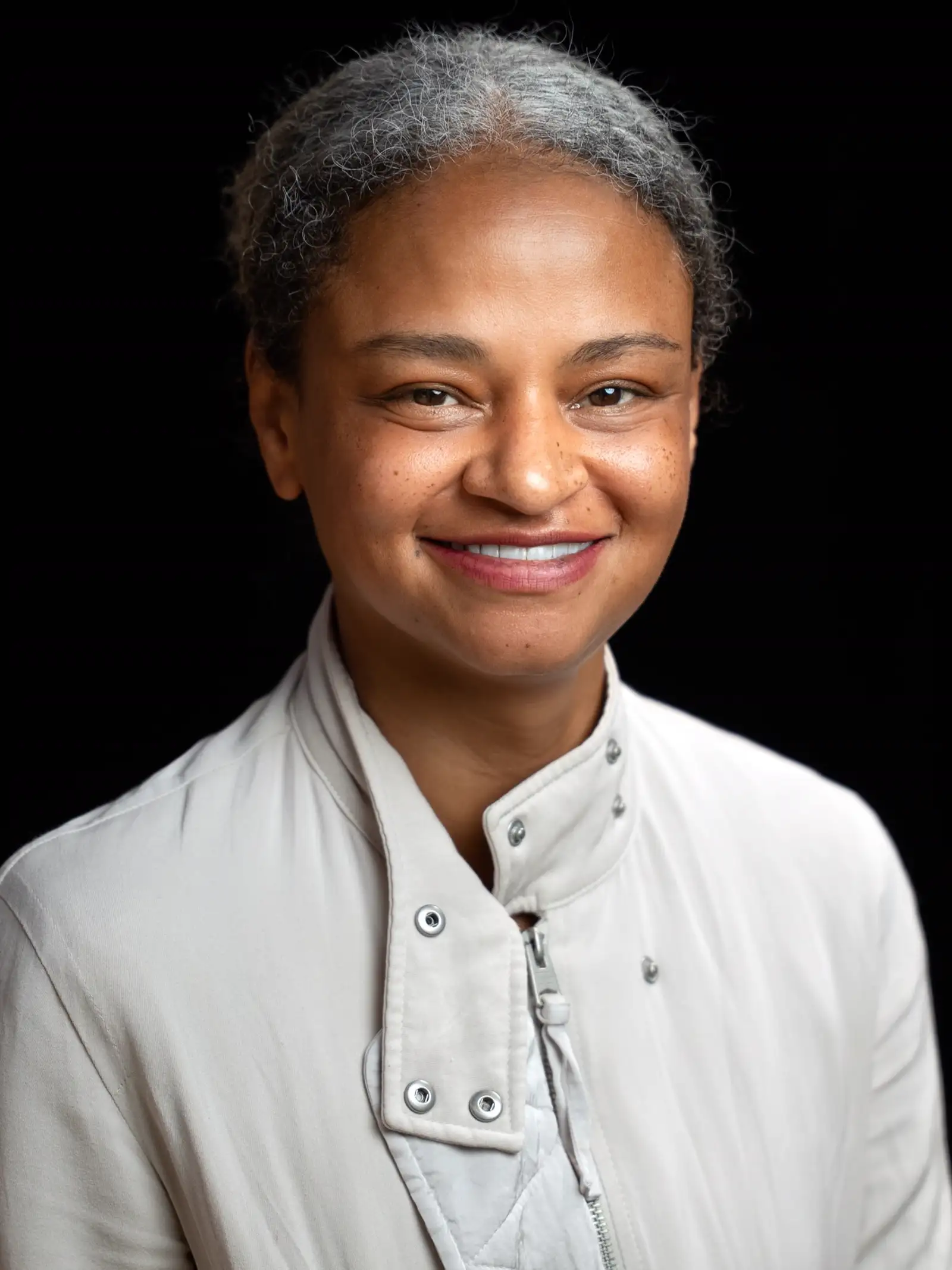
Mirelle Martins
A performance artist and creative director. She started dancing at twenty-eight, in 2013, with no background in it at all, and has moved almost every day since.
She has scoliosis. Practicing Gaga, the movement language created by Ohad Naharin, taught her to listen to her own body with a different kind of attention, and over ten years her spine changed with it. She also lives with generalized anxiety, diagnosed when she was a teenager. Dance did not take it away. It gave the energy a place to go.
What she learned is that the possibilities of a body are endless. What they need is a safe space, where health comes first in every movement. That is what Dance for Health is meant to be, for women.
She is not promising you the same. She is opening the room where your own discoveries can happen.
What to bring
Socks. Something loose you can lift your arms in. A skirt if you have one, because the room is big and skirts are better when you turn. Water.
Come barefoot in spirit: leave the shoes at the door, leave the mirror behind, and bring whatever body you have today. Everything else you already have.
This is not a wellness claim. It's what the research says.
Moving matters, and most of us don't move enough.
The World Health Organization recommends 150 to 300 minutes of moderate movement a week for adults. The benefits it lists include lower all-cause mortality, better bone health, better sleep, and reduced symptoms of anxiety and depression. Nearly a third of adults worldwide do not reach that minimum, and women are less active than men.
Dance is one of the ways people actually keep moving.
A 2021 review pooled 28 randomised controlled trials covering 2,249 people and found dance interventions significantly reduced symptoms of depression, anxiety and stress. A separate meta-analysis of 41 controlled studies covering 2,374 people found small but consistent improvements in well-being, depression and anxiety.
Moving together does something moving alone does not.
Researchers at the University of Oxford found that people who danced in synchrony with others showed raised pain thresholds, a standard proxy for endorphin release, and reported feeling more socially bonded. Those who danced out of sync showed no such effect. This is the part a video at home cannot give you.
For women's bodies specifically.
In a controlled trial, 24 weeks of aerobic dance improved femoral neck bone mineral density in postmenopausal women with osteopenia, while the control group continued to lose density.
What we are careful not to say.
Dance is not a treatment and this session is not therapy. What the evidence supports is simpler and still worth an hour of your week: regular movement is good for your body and your mood, dancing is a form of it that people tend to keep doing, and doing it with other people adds something measurable on top.
Sources: World Health Organization (2020, 2024) · Hu et al., Complementary Therapies in Clinical Practice (2021) · Koch et al., Frontiers in Psychology (2019) · Tarr, Launay & Dunbar, Evolution and Human Behavior (2016) · Chuin et al., Medicine (2019).
Dance for Health is a movement session, not medical care. If you are managing an injury or a health condition, talk to your doctor first.
Questions
Good. Most of the room is in the same position. There is nothing to learn beforehand and nothing to catch up on.
Learn more
Leave your details and we will send you more about the inaugural sessions of Dance for Health.